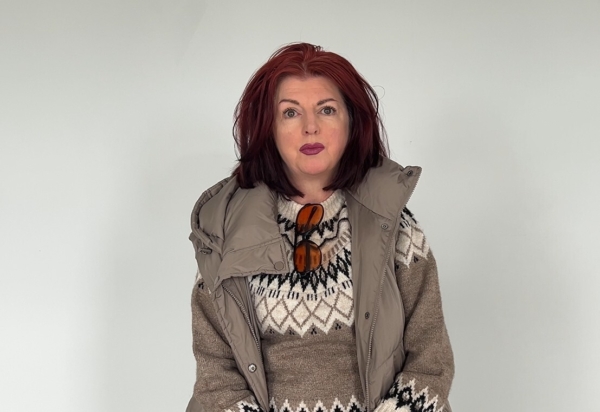
Clare Doherty, from Derry/Londonderry, had a severe stroke last summer which was caused by undiagnosed high blood pressure. Clare is sharing her story in support of World Hypertension Day which was marked recently as well as for local health charity Northern Ireland Chest Heart & Stroke’s (NICHS) current blood pressure awareness campaign. Clare wants to use her experience to encourage others to get their blood pressure checked due to the fact high blood pressure rarely displays any symptoms and is often only discovered after someone suffers a stroke or heart attack.
Clare recalls; “I had my stroke in July last year. I had returned home from a trip away and had just sat down to watch some TV with a cup of tea when I started to feel extremely sick. I vomited and went back and forth to the bathroom for a while, but I just knew something was terribly wrong.”
“My stroke didn’t really present like the FAST acronym (F- Face – is it drooping on one side? A- Arms – is there arm weakness? S - Speech - is it slurred? T- Time to get to hospital ASAP), it started in my right hand. It went a funny colour of purple and then I could feel it moving up my arm. I said to my daughter, Niamh, ‘phone an ambulance, I’m having a stroke’. I just knew. I don't know how I knew as I've never experienced anything like that before, but I did. I was so lucky my daughters were at home; I could have died otherwise.”
“Niamh phoned 999 and then went to my neighbour’s house for help. Their son is a paramedic, and he just happened to be there. When he came in, I just kept saying ‘stroke’ over and over again, that’s all I could say. Thankfully, the ambulance came quite quickly, and I kept saying it then too. The paramedics told me they were taking me to hospital and I remember thinking, ‘I am not closing my eyes. If I close my eyes, I'm not going to open them again.’ I read the signs in the ambulance just to keep me conscious and present, but at this stage I couldn't talk.”
Clare continues; “By the time I got to Altnagelvin Hospital one of my eyes was rolling into the back of my head, and the other eye was away over somewhere else so I couldn’t see. I was blind, I couldn’t talk and I couldn't walk but I could hear everything that was going on. I was screaming on the inside, but nothing would come out. That was terrifying, I thought ‘goodness, this is what Locked-In Syndrome is like’ and I was so scared, but I was determined to try and stay awake. I must have been coming in and out of consciousness however as I do have some blanks from that time.”
“My daughters were told I wasn’t expected to make it through the night. I was put in the family room with them and my sister came as it was touch and go. I was still aware of everything that was happening however, so it was a horrific experience for us all.”
Thankfully, Clare made it through the night and subsequent investigations determined she had suffered a haemorrhagic stroke (when there is bleeding in or around the brain) which had been caused by high blood pressure. Clare explains; “Treatment wise I wasn’t really given any medication. I wasn’t given blood pressure medication because although it was raised at the time, it was also dropping and going extremely low. I had paracetamol and a sleeping tablet and that was it for about five weeks.”
Over time, Clare started to make a recovery. “Each day I came around a bit more, but it was five weeks of just trying to keep myself alive to be honest. Eventually I was able to sit up in bed, and I could talk and see again. I was getting occupational therapy and physiotherapy as I had to learn to walk again and had a lot of spasticity in my arms. The muscles were very tight and stiff, and I would also experience spasms.”
“It was a slow process which was really tough going but I was just glad I was alive. I wasn't supposed to survive, or if I did, I should have had severe long-term effects, maybe never being able to leave a care setting. My Consultants would say they didn’t know how I was still living. I didn’t know and I didn’t care; I was just so grateful I survived.”
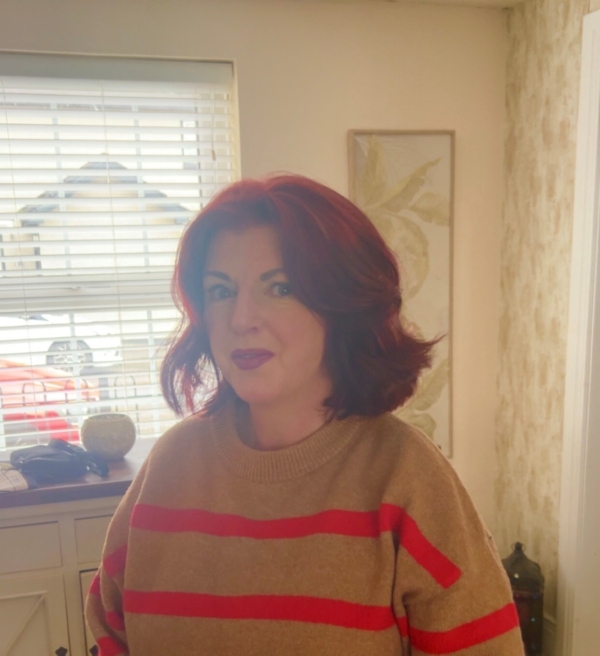
“The fact my stroke was due to a bleed in my brain did cause me a lot of anxiety however, I kept thinking, ‘is my brain still bleeding?’. When I was due to be discharged from hospital, they couldn’t decide whether to do another scan before I left but I said I wasn’t leaving until they were sure the bleed had stopped. I had another CT scan and thankfully that showed the bleed was actually healing itself and healing well.”
On her discharge from hospital, Clare was referred to Northern Ireland Chest Heart & Stroke (NICHS) for further support. “One of NICHS’s Care Coordinators, Nikki, visited me at home and explained about the different services and programmes the charity offers post stroke. I was very keen to engage with as much as possible because although everyone had been so kind and professional, I felt very strongly that I needed to be around people who had experienced stroke themselves. Everybody is different and everybody's experience is different, but I needed to know that others truly understood what I was talking about and how I was feeling.”
“I went to NICHS’s Post Rehab Exercise Programme which is a physiotherapy led course. I liked it because it doesn’t overwhelm you with information and the staff and volunteers are down to Earth. I also now go to the charity’s Wellness Sessions which focus on managing life after a stroke through things like exercise, emotional wellbeing and peer support. Through the NICHS groups I have the opportunity to talk to others who have had strokes and that has been so important to me.”
Highlighting how the impacts of a stroke can be wide-ranging Clare says, “There are a lot of losses when you have a stroke. I have been unable to return to work in therapeutic counselling and stepping back from that has been a big loss to me.”
“There is a loss in that I’m still me but it's a hugely different way of life now. Fatigue is a big issue- I can be nailed to the sofa even after 12 hours in bed. Long term this has affected my whole right side, from the top of my head to the tips of my toes. The only way I can explain it is it’s like when you have been to the dentist and had an injection and your face is numb. My entire right side, including my face, feels like that all the time and it’s sore as well. It can make doing small things that you take for granted very hard- putting on a shoe or pouring the kettle can be nearly impossible at times. I also get my words mixed up regularly and what is in my head doesn’t always come out of my mouth which can be very frustrating.”
“There is the physical impact but also a massive mental impact and going to the NICHS groups has really helped with that. Although everybody's stroke is different there can be similarities and it helps to talk to others, to share experiences or hints and tips for dealing with things. You can relate to each other, you don’t have to explain, people just understand. Although others are well meaning, the stroke gets a lot of airtime and sometimes I don’t want to talk about it. That is why the NICHS groups are so vital to me because I can talk about the stroke there, but I don't want to talk about it 24/7.”
“It's a very tough way of life now but what can you do? You have to accept it. It has been so hard for my daughters too, I hate to think about what they had to witness when I was so ill. Stroke impacts the whole family.”
“I'm lucky to be alive, lucky to be able to communicate. It has been a hard recovery journey and one that I’m still on, but I am resilient. I’m only 51 and never thought in a million years something like this could happen to me. Yes, stroke is part of my life and my story but I’m still me, it doesn’t define me. I’m here, despite the doctors fearing the worst and I’ve come such a long way.”
Talking about her support for NICHS’s current campaign Clare says; “I am supporting this campaign to highlight the dangers of undiagnosed high blood pressure. I hope sharing my story helps make people more aware and encourages them to get their blood pressure checked. There are often no symptoms of high blood pressure and if you don’t check it, you won’t know if your blood pressure is high.”
“I would encourage everyone to check their blood pressure, no matter what their age, lifestyle, whether they feel fine- it could stop you going through a life-changing health event like I did, or even save your life.”
Fidelma Carter, Head of Public Health at Northern Ireland Chest Heart & Stroke, says; “We are very grateful to Clare for sharing her story in support of our current campaign as it shows just how dangerous undetected and untreated high blood pressure can be.”
“Over 299,800 people, or around 20% of the adult population in Northern Ireland have a diagnosis of high blood pressure but there is a significant number of people, around 120,000, who have high blood pressure and do not realise it. This gives us great cause for concern due to the fact one in two heart attacks and strokes are linked to the condition and it is something our current campaign aims to change.”
“Undetected high blood pressure is often known as ‘The Silent Killer’ due to the fact it rarely causes any physical symptoms or warning signs and is often only discovered after someone suffers a stroke or heart attack. The only way to know what your blood pressure is, and if it is high, is to have it measured and that is what we are urging the public to do.”
“As part of our campaign, we are also urging anyone who is on medication for high blood pressure to take it as prescribed by their doctor or health professional and to never stop taking it without talking to them and getting their approval. The risks are just too great. If you are on blood pressure medication, you should also go for an annual check to review your medication.”
“A blood pressure check is quick, simple and only takes a few minutes, but it really could help save your life. There are several ways to get your blood pressure checked. You can make an appointment with your GP practice, where a practice nurse may be able to take your blood pressure, or you can visit your local pharmacy, many of which offer blood pressure monitoring services. We recognise that it can be difficult for some people to get a GP appointment, so we are also encouraging people to consider buying a home blood pressure monitoring machine if possible.”
“Alternatively, you could attend the free pop-up blood pressure checks we will be delivering at selected stores of our corporate partner MACE throughout May and June. Our website and social media channels have all the details about the pop-up checks so please follow us online for more details as well as lots of resources and information about blood pressure.”
For further information and support about blood pressure, visit www.nichs.org.uk/highbloodpressure