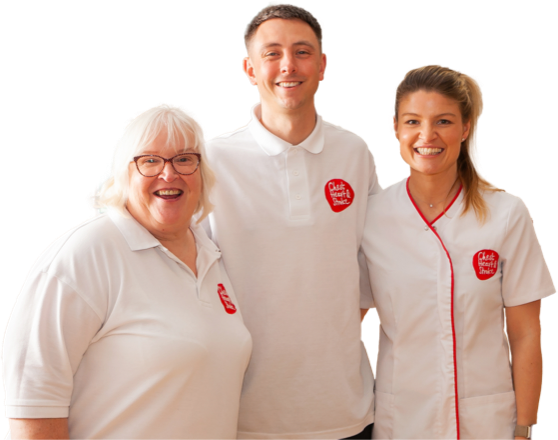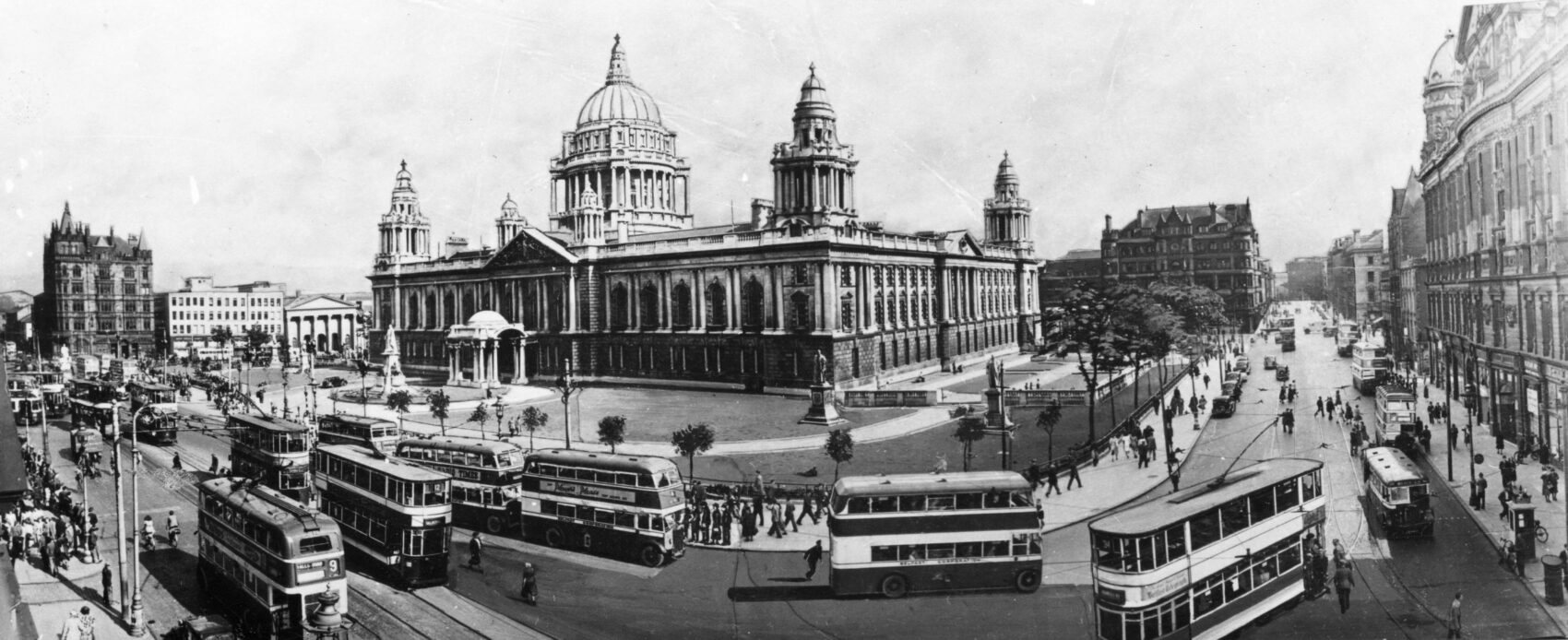
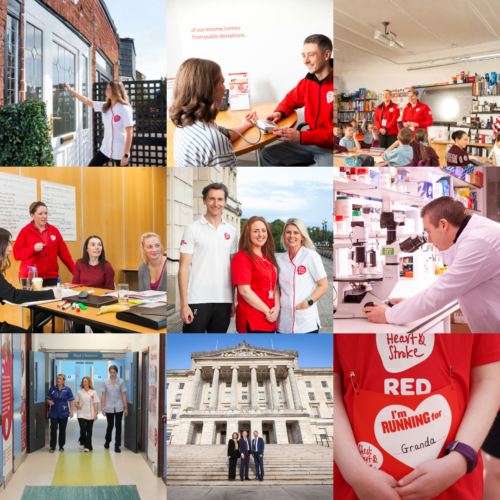
Northern Ireland Chest Heart & Stroke has been here, in Northern Ireland, for 80 years – since 1946.
We’re here...
In homes
In communities
In schools,
In workplaces,
In universities
In hospitals,
At Stormont.
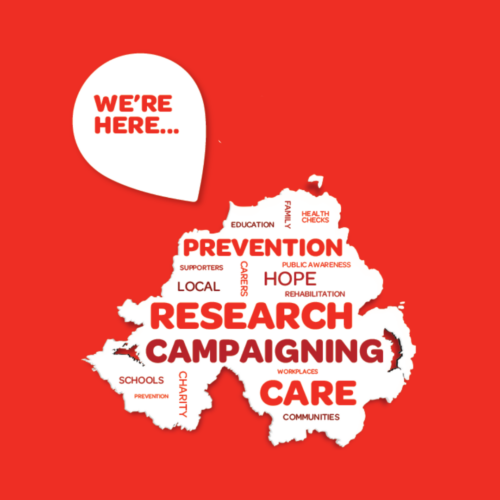
We're Here...
...all over Northern Ireland to help people live well and live longer.
We're Here...
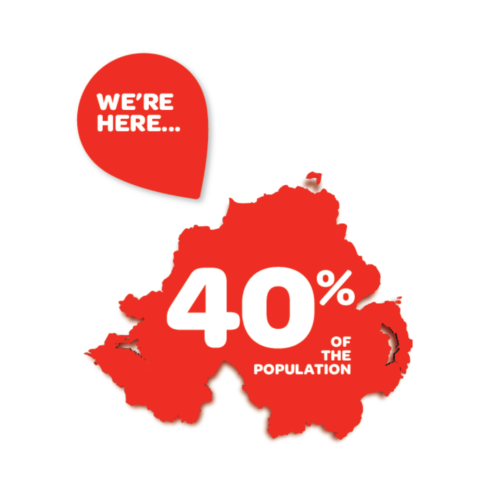
...to care for and support everyone living with chest, heart & stroke conditions - that's 40% of our population.
We're Here...
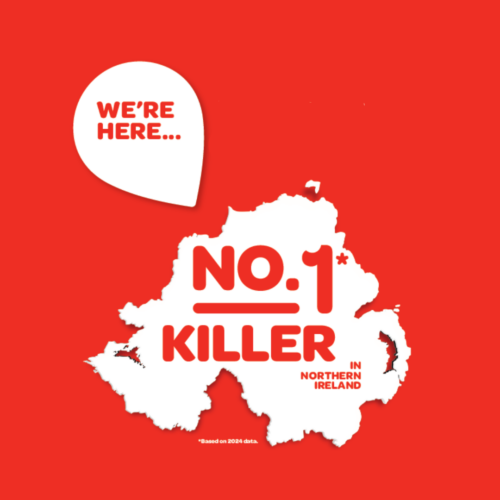
...because chest, heart and stroke conditions are the No. 1* Killer in Northern Ireland.
We’re your leading local health charity, making a real difference to local lives.
90% of our income comes from public donations. We need to raise £4.5 million every year to continue providing our services and hope to those who need us. We couldn't be here with the generosity of people all over Northern Ireland.
Thank you for supporting us.
Our Story So Far
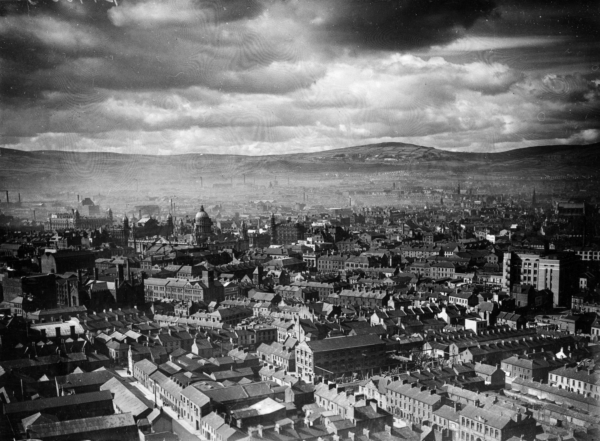
On Friday 14th June 1946, 16 visionary volunteers called a meeting in a borrowed room on William Street South, Belfast.
There they set up the first NI branch of the National Association for the Prevention of Tuberculosis.
Eight decades later, the world looks very different. But that organisation is still thriving, albeit with a new name.
It is, of course, Northern Ireland Chest Heart and Stroke!
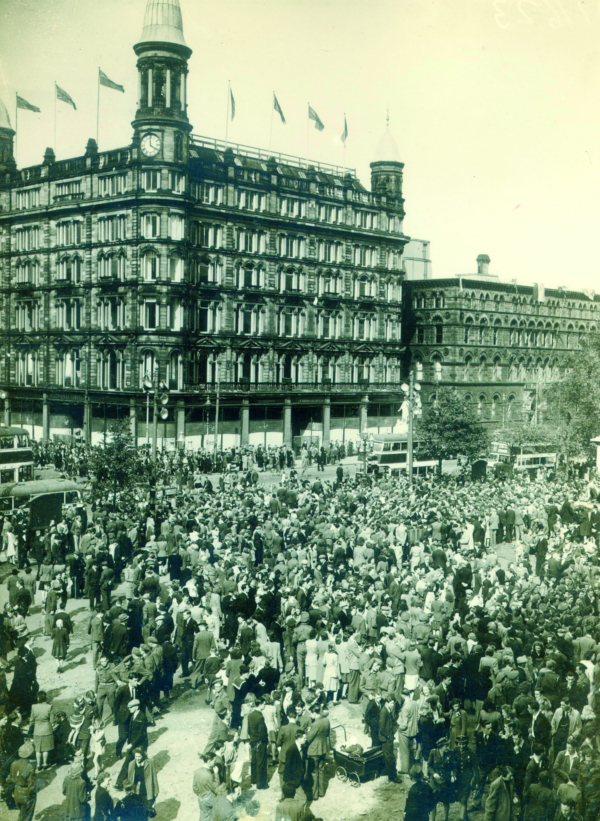
1946 was a very big year for Northern Ireland; legendary footballer George Best was born, local artist John Luke completed the infamous Northern Rhythm, and Nutts Corner replaced Belfast Harbour as the principal civil airport. But, as well as significant progress in sport, art and aeronautics, 1946 saw a huge step forward for public health.
By 1946, the second world war had ended but the repercussions of six years at battle still rippled through the farthest corners of Northern Ireland. At the beginning of the war, rationing in NI was more relaxed than neighbouring England and conscription was voluntary, but the relative comfort did not last. Northern Ireland’s industrial contribution to the war effort, including aircraft, ships and linen, made it a target. The Belfast Blitz of 1941 devastated the city. Over 100,000 people were left homeless and deprivation, particularly in the cities, was rife. In the countryside, families supplemented rations with homegrown vegetables but, in the city centres, poor nutrition, inadequate cramped housing and poverty, exacerbated by returning servicemen, waged a third war – this time on health.
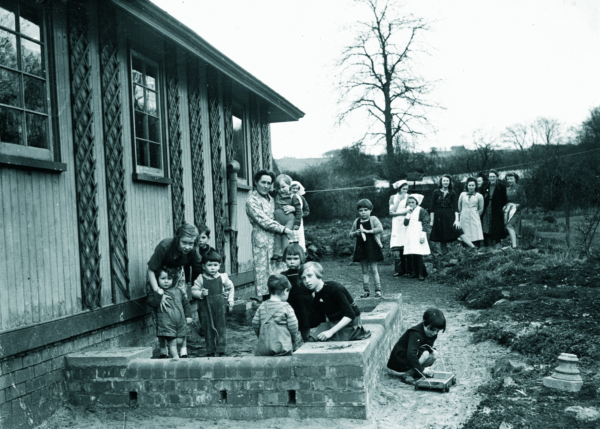
The new enemy, an airborne bacterial infection, Tuberculosis (TB), was actually anything but new, having existed in Ireland since the 1600s.
But, with the poverty of post-war, the infection rate was on the rise and Northern Ireland was suffering from the highest death toll from TB of anywhere in the UK.
Northern Ireland was in crisis. Recognising the devastating effects of this pandemic, the 16 volunteers called a meeting on Friday 14 June 1946, in a borrowed room on William Street South in Belfast. Their mission was to educate people about TB, disseminate information about the disease and care for those suffering.
Today, the core values instilled by these volunteers remain unchanged; those of caring, committed, courageous, considerate and connected. The charity won the war against TB and adapted and evolved, changing its focus to concentrate on all diseases of the chest and heart in 1959, and further expanding to include stroke in 1976.
Where We Are Today
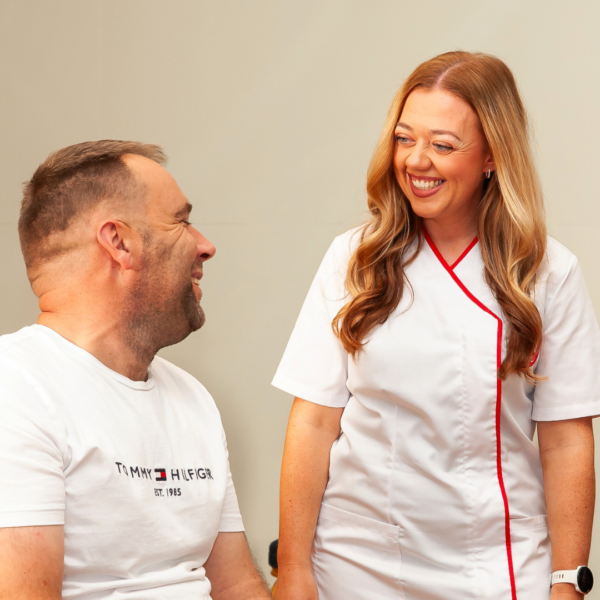
Northern Ireland Chest Heart & Stroke (NICHS) was founded on 14th June 1946 with a simple belief that people deserved better health, better care and better chances in life.
Chest, heart and stroke conditions remain the leading causes of death and disability in Northern Ireland. Yet too many of these illnesses are preventable.
This is why our new strategy for 2026-2029, Live Well Live Longer, matters.
Our strategy sets out how we will work over the next three years to help people live longer, healthier lives — and to ensure that inequality does not determine life expectancy or quality of life. It is both a statement of intent and a call to action.
Shaped by lived experience
Live Well Live Longer has been shaped by the voices of people with lived experience, carers, volunteers, staff, partners and supporters across Northern Ireland. We listened carefully to what people told us — about what works, where gaps remain and what truly makes a difference when you are living with or at risk of a chest, heart or stroke condition.
We are delivering this strategy at a time of significant pressure on health and social care services. Waiting lists remain unacceptably long. Workforce shortages persist. Public finances are constrained. At the same time, demand for support continues to rise as our population ages and more people live longer with complex, long-term conditions.
As Northern Ireland’s leading health charity we are uniquely placed to bridge the gap between communities and health systems; between prevention and care; between lived experience and policy.
Our purpose is clear: we stand with people, communities and partners to prevent chest, heart and stroke illnesses, rebuild lives, push for change and challenge health inequalities.
To deliver this purpose, Live Well Live Longer focuses on six interconnected priorities, tackling health inequalities, care and recovery and support, prevention and early detection, research and innovation,
influencing policy and systems and making a difference and delivering impact
Today, as we celebrate 80 years of NICHS, we look back to the beginning and thank the original 16 volunteers:
Mr Bradley McCall (chair), Dr H Aiken, Dr B R Clarke, Mr Davidson, Councillor C G Hall, Dr H P Hall, Miss J Heslip (later Mrs Middleton), Mr D Lyttle, Mr B McGuigan, Mr A Millar, Mrs J Oliver, Mr J Parry, Mr D Ross, Mr W Scott, Miss D Todd and Dr N Whyte.