Global Atrial Fibrillation Aware Week takes place 16th-22nd November and leading local health charity Northern Ireland Chest Heart & Stroke (NICHS) is using the week to increase awareness of Atrial Fibrillation (AF), the most common form of irregular heart rhythm, and the increased risk of stroke associated with this condition.
Over 48,000 people here have a diagnosis of AF and a further 12,000 may be undiagnosed according to the charity. 20%-30% of all strokes are attributed to AF but 30%-40% of people will not know they have AF until they have a stroke. Fidelma Carter, Head of Public Health at NICHS, explains; “Atrial Fibrillation (AF) is a heart condition that causes an irregular and often abnormally fast heart rate. AF can also increase a person’s stroke risk by up to five times if untreated. This is because the heart may not empty its chambers of blood at each beat, increasing the risk of a clot forming in the blood left behind, which can then travel to the brain and cause a stroke. The stroke is also more likely to be severe with almost double the death rate, an increased likelihood of disability, longer hospital stays and a bigger risk of a stroke happening again.”
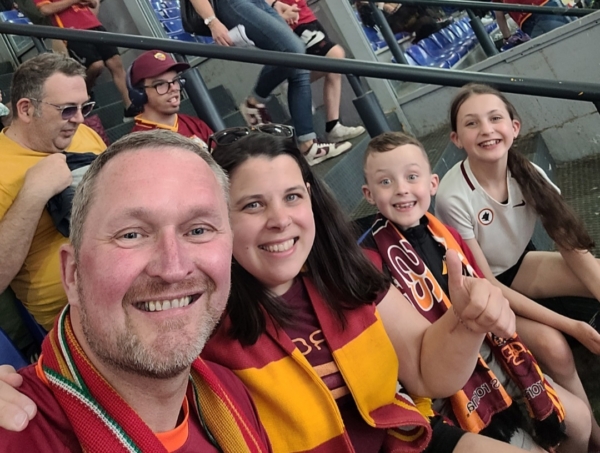
Johnny Greer, 50 from Aghalee in County Antrim, knows exactly what it is like to live with AF and he is sharing his story to support NICHS’s efforts to raise public awareness of the condition. “I was first diagnosed with AF at just 36 years old. I was a runner, running for Dromore Athletics Club doing 10k in 38 minutes, rowing, and cycling a lot so being diagnosed with a long-term heart condition was not something I thought would happen to me.”
“I started to experience dizzy spells, particularly when standing up, feeling like I was going to fall over. Like many of us do, I self-diagnosed and assumed I had something going on in my head. I never thought it could be anything to do with my heart.”
“I was at work one day and spoke to the doctor on duty about what I had been experiencing. He listened to my heart and said, ‘The good news is I don't think you have a brain tumour, but the bad news is you need to get to hospital immediately’. He told me I had AF and was at high risk of a stroke if I didn’t seek medical treatment.
I went to A&E where I was formally diagnosed with AF and prescribed Warfarin due to the high stroke risk. I felt more settled once I was diagnosed and was on the medication as I knew that would help reduce my risk.”
“After a while however I had to have electrical cardioversion as part of my treatment plan too. This involves using electric signals to get your heart rhythm back to a normal pattern. They put sticky pads on your chest and use a defibrillator to send electric signals to your heart. It was scary the first time but I felt the difference straight away. Afterwards I actually stopped thinking about my AF as I felt like my old self again and then I started looking forward to my shocks because of how I felt afterwards and the benefits it gave me.”
“Over the years I've had eight cardioversions. My last treatment was three years ago when it unfortunately stopped working for me. At first I got eight months out of the treatment before my heart rhythm went out of sync; the second time it was six months. Then it was five months, then three months. Eventually, I was back out of sync before I even got to the hospital car park.”
“I also had a procedure called ablation which is used to treat areas of the heart involved in heart rhythm problems. During this, doctors go through your groin into the veins at the top of your leg and up to your heart. They use heat or extreme cold to destroy the tissue that is causing the problem. I did really well for about eighteen months after the ablation but then that stopped working for me too.”
Talking about the impact AF has on him Johnny explains; “Living with AF is hard. I don't, but by 4pm I could go to bed. The fatigue is severe, it’s a totally different ball game to feeling tired. For someone that was so active that has been hard. Over the years I've had to learn I just can't do what I used to be able to do.”
“Every day I get dizzy spells and light-headedness especially when standing up. I have blacked out eight to ten times over the years. The last time I was walking the dog when my son was at football training and the next thing I was looking at the sky. That is frightening.”
“I can have days when my heart will race and I just need to go to bed. I just feel so awful at times but it’s difficult to put into words how you actually feel. I just know I’m not well and that is frustrating.”
Unfortunately for Johnny, doctors have never been able to find the underlying cause of his AF and now treatment options are limited. “I had genetic tests and those usually show a reason but my tests came back inconclusive. My GP told me I was the most bizarre and complex case of AF he had ever seen because nothing they seem to do works. I now have chronic AF and heart failure.”
“The doctors told me we're out of treatment options and the only way I will have a proper beating heart would be through a transplant and it is unlikely this will happen. I was basically told, in the nicest way possible, that this is just the way it will be for me, I have to live with it. All the symptoms and side effects I’ve had on and off for 14 years are now what I will have permanently. The last test I had showed my heart was working at just 32%. I see the heart failure team at Craigavon Area Hospital quite regularly but have been told this is it, they are just trying to control my AF and heart failure with medication.”
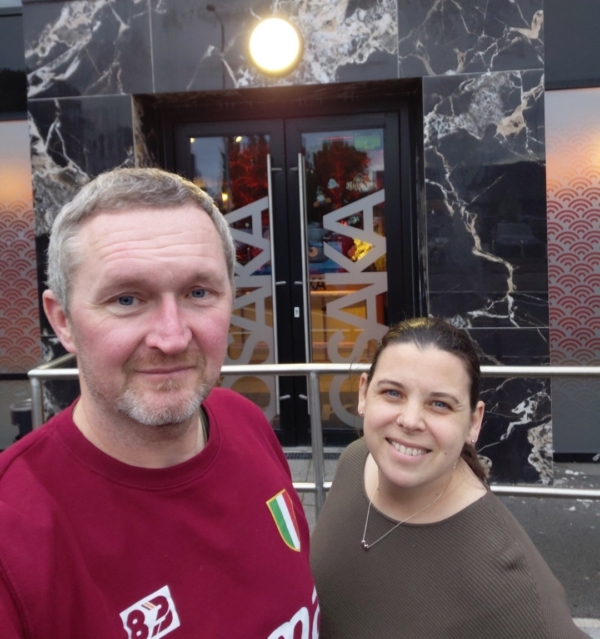
“To be told at just 50 years old you are out of treatment options is horrible. With all treatment apart from medication ruled out, what might happen long term? Yes, AF is a physical problem, but it is the psychological feeling of ‘am I going to die?’ That’s the worry. There are also cardiac issues on my paternal side of the family and my father died from a heart attack. But it is what it is and I just have to do what I can. I eat healthily, I don't smoke, I don’t drink anymore. I try to look at it as, it's what I've got and worrying about it might put more stress on me and make it harder for me to deal with physically and mentally. I’m just trying my best to live with this and come to terms with the fact this is as good as it gets.”
Somewhere Johnny did get much-needed help and support was cardiac rehab, which is also where he came into contact with Northern Ireland Chest Heart & Stroke. “I found being able to talk to others at cardiac rehab so helpful. Everybody had cardiac issues and there were a couple of us with AF so it was good to talk to others who know how it feels to live with the condition. My family don’t like talking about the AF and that can be hard. I understand it’s too close to home for them but you need to get things off your chest sometimes and talk about how you feel. Cardiac rehab and my friends help with that.”
“Not everybody gets offered cardiac rehab however and I think that’s terrible. I've had AF for 14 years and it was only last year I was offered cardiac rehab. I was 36 when I was diagnosed, I had a young family, I was working, trying to learn to live with the condition- I was juggling a lot and I would have benefitted from cardiac rehab a long time ago.”
Johnny continues; “I met Suzanne, one of NICHS’s Care Services Coordinators, when she came in to talk to our cardiac rehab group about what the charity does and the services they offer. I've always volunteered and told her I would like to get involved with NICHS as it is heart related and importantly, a local charity. That’s why I’m sharing my story and highlighting AF, to support NICHS as they do so much great work helping people affected by cardiac conditions.”
“Suzanne came to my home as part of NICHS’s Family Support service. She also put me in touch with a guy who had recently been diagnosed with AF and we met for coffee and a chat which he found really useful. He was in his early forties, had children, was working, so his situation was similar to mine. I think the fact I’ve been living with AF for all these years was a relief for him to hear. I was able to talk about cardioversion, what that is like to go through and so on. I was happy to try and help someone else starting out on their journey of living with this condition. That’s why I’m sharing my story and highlighting AF, to support NICHS as they do so much great work helping people affected by cardiac conditions.”
Johnny concludes; “I would urge people, if you are experiencing any symptoms of AF or anything that isn’t usual for you, please get it checked out. Don’t ignore things. I was having dizzy spells for a long time before I spoke to a doctor. I was being a stereotypical man about it, thinking I’d be fine, that I’d get it looked at the next time it happened but I kept putting it off until something pushed me to just get it sorted out. I could have had a severe debilitating or even fatal stroke at any time over those months. That doesn’t bear thinking about. You don’t want to look back and think a major health event, or worse, could have been prevented.”
Fidelma Carter adds; “We are extremely grateful to Johnny for sharing his story of living with AF in support of our charity and Global Atrial Fibrillation Aware Week and would echo his call for the public to seek medical advice if there is anything they are experiencing they are concerned about.”
“Sometimes AF displays no symptoms and is only detectable during a medical examination. Some people however may experience one or more of the following symptoms- heart palpitations, fluttering or thumping in the chest, feeling very tired, breathlessness, or feeling faint at times, should make an appointment to see their GP.”