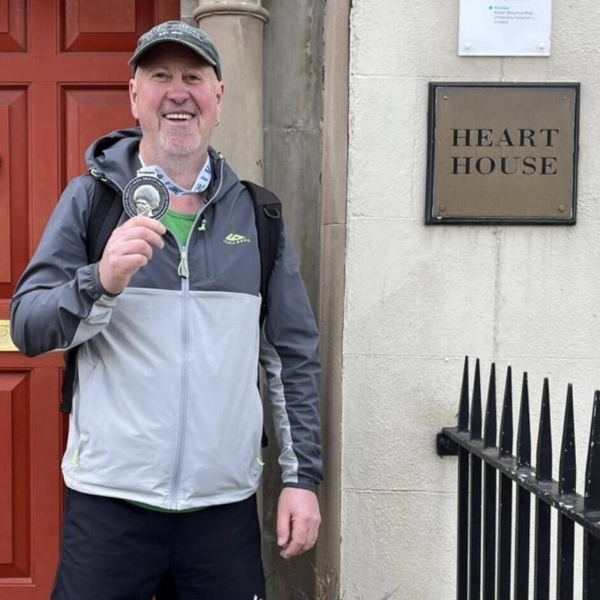
Noel Williamson is conscious of his health, not drinking or smoking, eating well and exercising regularly. A typical run at his local running club one night turned into a life-threatening situation however when Noel’s heart suddenly stopped.
Thanks to his determination and hard work, Noel has recovered remarkably well and now wants to use what happened to him for something positive. Noel is sharing his story to help spread awareness of heart attack and cardiac arrest and in support of NICHS as he prepares to take on the upcoming Irish Life Dublin Marathon to support our work.
Noel, 60, recalls; “I am originally from Portglenone but now live in County Meath where I am a member of St Andrew’s Athletic Club. I was out on the track on 16th July last year, training for an upcoming 10-mile race, when I just went down on my hands and knees and fell over, dead. I had had a heart attack and went into cardiac arrest. My heart had stopped and stayed like that for four minutes. It is terrifying to think I was dead for that time.”
“Thankfully, there were other members of the club there, including a doctor and a nurse, who ran to my aid, performed CPR and used the club’s defibrillator whilst an ambulance was on its way. I was actually lucky to die where I did. I’ve often gone running at the track and no one else has been around. I’m lucky there were a lot of people there that night and some who knew CPR.”
Noel’s ordeal did not end with the arrival of the ambulance. His heart had to be restarted again on the way to the Mater Misericordiae University Hospital Dublin. The medical staff there told Noel afterwards they didn’t have much hope he would survive when he was first admitted as the survival rate after a cardiac arrest is just 3%.
Noel continues; “At hospital they did a balloon angioplasty which showed I had four blocked arteries. I had a quadruple bypass five days later. I never dreamed I would have a heart attack or cardiac arrest; I was fit and healthy, but I later found out I had a genetic condition. The cardiologist told me this would have happened no matter what, but if my lifestyle wasn’t as healthy as it was, this would have happened earlier, and wouldn't have been survivable.”
“In the months leading up to my heart attack and cardiac arrest I had a pain in my back. I knew something wasn’t right, but I never thought it was my heart. I thought it was a trapped nerve or a pulled muscle, and I went to a physio twice about it. I was told afterwards a back pain can be a sign of a cardiac issue, but I didn’t know that at the time. It’s important that if people have something that is niggling them, they get it checked out. Keep pushing if you aren’t happy about something because your health is number one.”
“I have no memory of the five days between the cardiac arrest and the quadruple bypass due to all the drugs I was on but when I did come round, I made a promise to myself that if I got through this, I would try and do something to help others and to and raise some money for charity. A marathon is the ultimate challenge so that is what I set myself.”
Talking about his recovery and the road to taking on a marathon Noel explains; “I went home about a week after the bypass and completed my rehab with the Cardiac Rehab Team at Heart House in Dublin.”
“Thinking about trying to get back to physical activity was scary but what really helped me was when I started cardiac rehab. I discussed my goals with the team, and we worked together to get me back on my feet. They monitored me closely and that gave me the peace of mind to push a little and see what I could do but in a safe environment. That gave me the confidence I needed.”
“Six weeks after the quadruple bypass I went to my club’s track and ran 400 metres. About fifty people came to run with me, and I prayed the whole way as I was so scared the same thing might happen again. My nerves were shattered. Every week I added another 400 metres and that’s how I built my running back up. I took things slowly, kept in touch with my doctor and just kept building on my strength each week.”
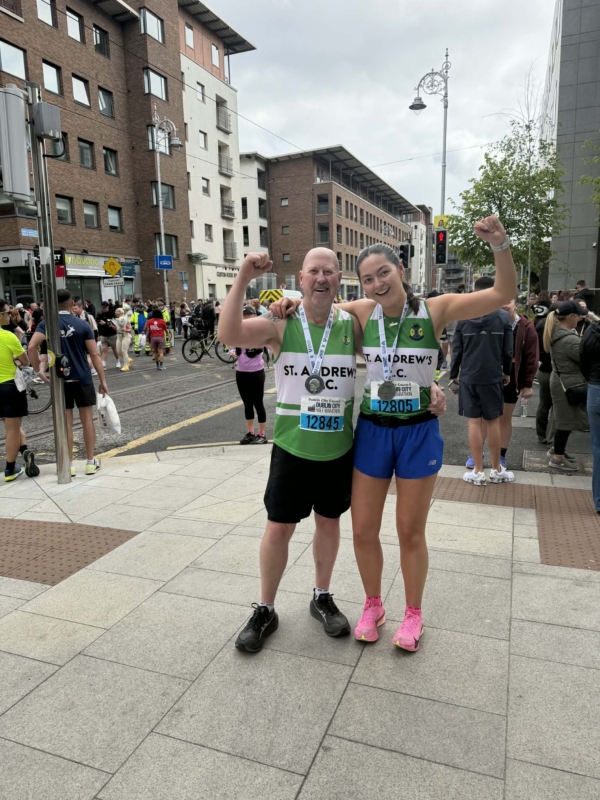
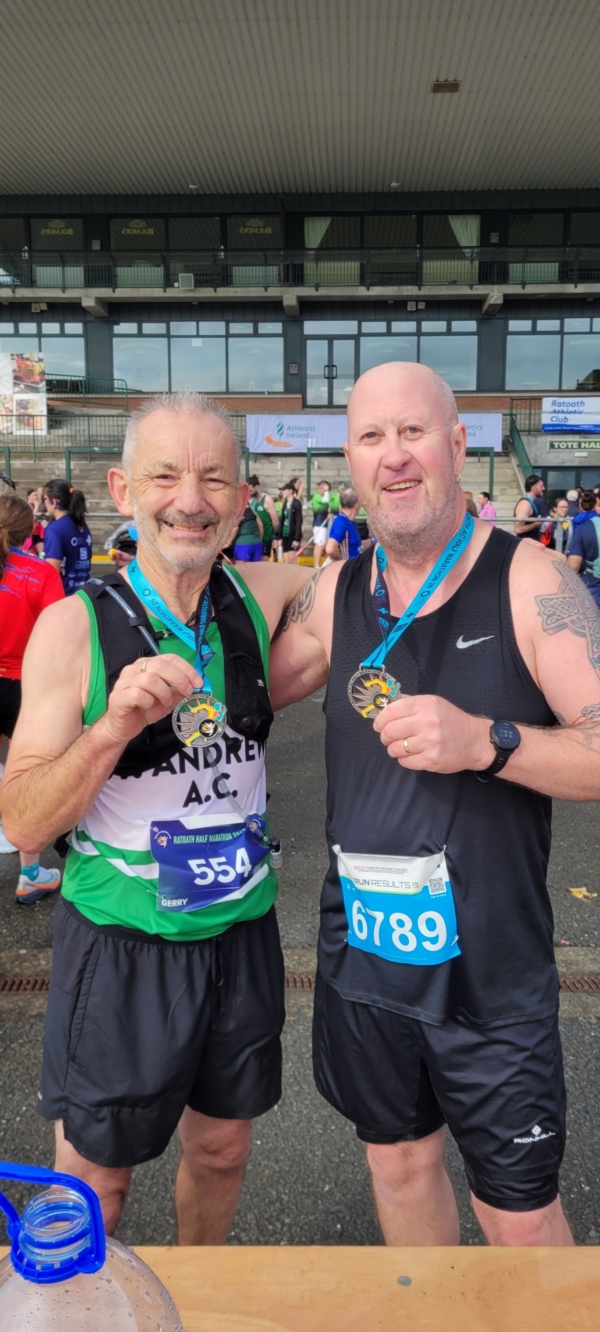
“In the February after I left rehab, I completed a challenge of running 10 kilometres every day for sixteen days to raise money for The Irish Heart Foundation and the Mater Misericordiae University Hospital Dublin. I then did the 2026 Dublin City Half Marathon for both organisations. You never lose sight of where you come from however, so I wanted my next challenge to help people in Northern Ireland, which is why I am doing the Irish Life Dublin Marathon for Northern Ireland Chest Heart & Stroke, a great local charity.”
Although Noel is now in a positive place, he is keen to highlight the impact going through a major health incident can have on someone. “What I have gone through has had a huge impact on me physically as well as mentally.”
“Physically I am still in pain. During the quadruple bypass, my sternum was cut open, and I have issues with my nerve endings, it’s like electric shocks going through your body. I can deal with the pain, you learn to live with it, but the mental impact has been massive too and that’s something a lot of people don’t realise.”
“For months afterwards I was scared to go to the toilet on my own and worried every day that I might drop dead again. Trying to come to terms with the fact I actually died has been extremely hard. You have bad weeks and good weeks. It's like a death in the family, sometimes it just hits you in waves. You think, ‘I was lying on the ground dead. How am I still here?’ It can be a big slap of reality.”
“However, I also know I am fortunate after talking to others at cardiac rehab who have been left with so much damage to their hearts that they will only live for another few years. I’m lucky compared to what others are going through.”
“I want to use what happened to me for something positive. The more awareness of heart attack and cardiac arrest the better because as I tell everybody, a year ago, I didn't even know what a cardiologist was. Hopefully sharing my story will encourage other to get things checked out that they aren’t totally happy about. I was fit and healthy and this happened to me. I’m talking about it after being through it, I’ve experienced the reality of what can happen.”
“For a lot of people affected by a lifechanging health event, it can be hard to see a way forward and the possibility of a positive future. Hopefully sharing my story might help others see that there is hope of recovery, of moving on, of a life beyond major illness. If I can do it, so can others. When I first came out of hospital I came out in a wheelchair, I couldn’t’ walk. I wasn’t allowed to drive. I couldn’t do simple things I did before like cut the grass. It made me think, ‘where is my life going?’ I would say however, look for the positives, take small steps, keep going and hopefully you will see it’s not all bad, that things can improve.”
“I might be going to the extreme of doing a marathon but even if you get out for a walk down the street, and go a little further each day that’s positive. Do what you can to help your recovery, that’s the point, recognise your achievements and you will see the difference to your physical and mental health. Take little steps, keep positive and there is light at the end of the tunnel.”
Noel concludes; “Northern Ireland Chest Heart & Stroke is currently celebrating its 80th anniversary which is an amazing achievement. I want to achieve something amazing too. Running 26.2 miles- that’s the distance between comfort and courage, between an ordinary day and a moment that could truly change lives. Every mile I run is a reminder of why I’m doing this; to make a real difference for those who need it most. It’s not just about crossing a finish line; it’s about showing up, pushing through, and turning effort into impact. I’m lucky to be alive, have a lot to be thankful for and I’m enjoying life.”
Leigh Osborne, Community and Events Fundraising Manager at Northern Ireland Chest Heart & Stroke, says; “We are extremely grateful to Noel for sharing his powerful story, raising awareness of heart attack and cardiac arrest, and taking on the incredible challenge of running the Irish Life Dublin Marathon in aid of our charity.”
“As Noel mentioned, NICHS is currently marking a significant milestone - 80 years of supporting and improving the lives of people across Northern Ireland but we are needed as much today as ever. Chest, heart and stroke conditions and illnesses account for 38% of all deaths in Northern Ireland, compared to 27% caused by cancer¹. Many people will find this fact surprising. Today, 40% of our adult population are living with a chest, heart or stroke condition or illness - approximately 600,000 adults². This is why the work of our charity is so vital.”
“As Noel’s story shows, the impact of a cardiac condition can be terrifying, but NICHS is here to help with expert care and support. Almost 90% of our income comes from public donations however so fundraising efforts like Noel’s are vital for our charity and what we can achieve. We are very grateful to Noel and wish him all the best for the 25th of October. If Noel's story has inspired anyone else to run a marathon, we have a limited number of places available for the 2027 Dublin and Belfast marathons. We would love to hear from anyone who may want to support us in this way so please get in touch on events@nichs.co.uk .”
To find out more about taking part in an event in aid of Northern Ireland Chest Heart & Stroke visit nichs.org.uk/events