Blood Pressure Matters
Knowing your blood pressure can help you look after your health.
Regular checks can help you find high blood pressure early and lower your risk of heart disease and stroke.
You can have high blood pressure without feeling unwell. Regular checks are the only way to know if your blood pressure is high.
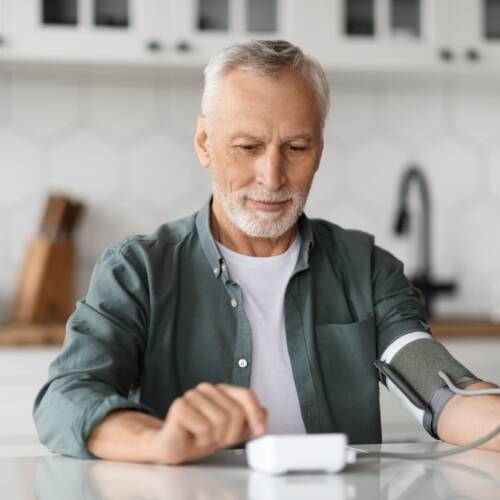
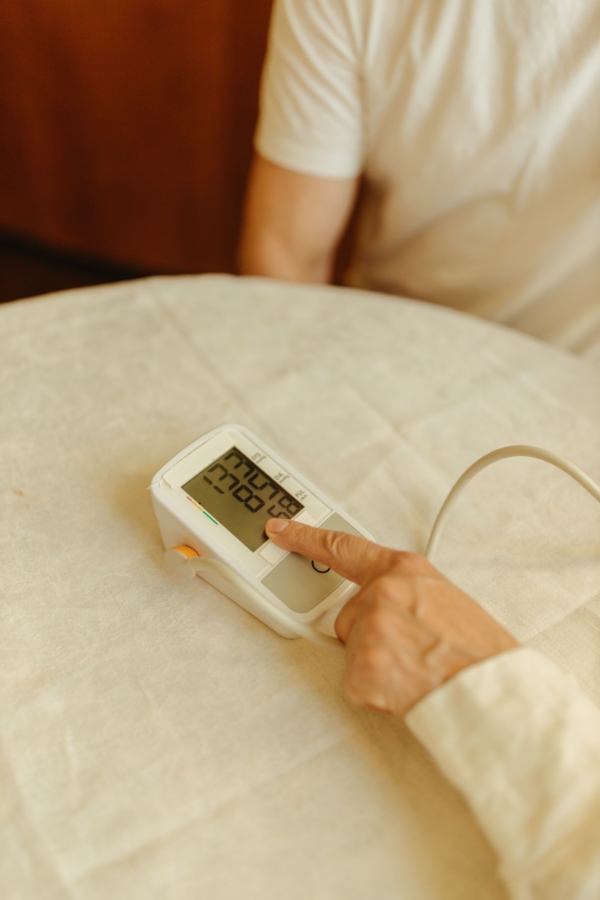
Measuring your blood pressure at home can help you understand what your blood pressure is usually like. A set of readings taken over several days gives a better picture.
This page explains how to choose/borrow a blood pressure monitor, when and how to take your blood pressure readings, understand your numbers and know when to get help.
Why check your blood pressure at home?
Checking your blood pressure at home over seven days gives several readings at different times. This gives a better picture of what your blood pressure is usually like than one reading taken on one day.
- Your blood pressure can change during the day.
- Some people have a higher reading when a health professional checks their blood pressure because they feel nervous. This is sometimes called “white coat syndrome”.
- You may feel more relaxed when you check your blood pressure at home. This may give a better picture of what your blood pressure is usually like.
- Blood pressure does not suddenly become a problem at one specific number.
The blood pressure levels used for home monitoring are lower than those used when your blood pressure is checked in a healthcare setting.
An average home blood pressure of 135/85 or higher is classed as high.
Home monitoring does not replace checks with a health professional. If you are aged 40 or over, you should usually have your blood pressure checked at least every five years. You may need checks more often if you have high blood pressure, take blood pressure medicine or a healthcare professional advises this.
Before you start:
Do you have a blood pressure monitor?
If you are buying a machine:
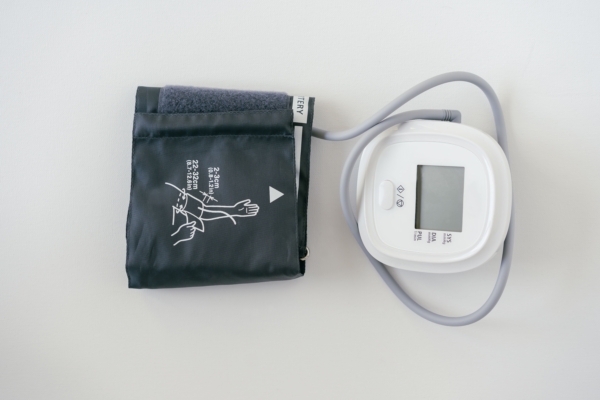
- Choose a validated automatic monitor with a cuff that goes around your upper arm.
- Choose a cuff that is the right size for your arm. Check the arm-size range on the cuff or in the instructions. A cuff that is too small or too large may give you a wrong reading.
- Follow the manufacturer’s instructions to look after your monitor. The British and Irish Hypertension Society advises replacing a home monitor after no more than four years.
- Choose a monitor from the British and Irish Hypertension Society approved list - click here to see it.

NICHS Library Lending Scheme
You may be able to borrow a blood pressure monitor through our blood pressure monitor lending scheme at participating libraries.
How do I check my blood pressure?
The best way to learn how to take your blood pressure correctly is to watch our short video.
Our video shows you how to use your blood pressure monitor safely and correctly.
Prefer written instructions?
Our Home Blood Pressure Monitoring booklet explains how and when to measure your blood pressure at home, step by step. It also includes a 7-day blood pressure diary to help you record your readings. You can download it below.
Just need the diary? You can download and print the diary separately below.
What do my blood pressure numbers mean?
Your blood pressure has two numbers.
- Top Number (Systolic) – pressure when your heart beats.
- Bottom number (Diastolic) – pressure when your heart relaxes between beats.
You will see your blood pressure as one number over the other.
If your readings are consistently 135/85 and above, take your diary with you and speak to your GP or healthcare professional
Your GP or healthcare professional may leave out the readings from the first day and use the readings from the other six days to work out your average home blood pressure.
Use our blood pressure chart below to understand your readings.
- Find your top number (systolic) on the left-hand side.
- Find your bottom number (diastolic) along the bottom.
- Follow the grid lines from each number until they meet.
- The colour where they meet tells you what your blood pressure means.
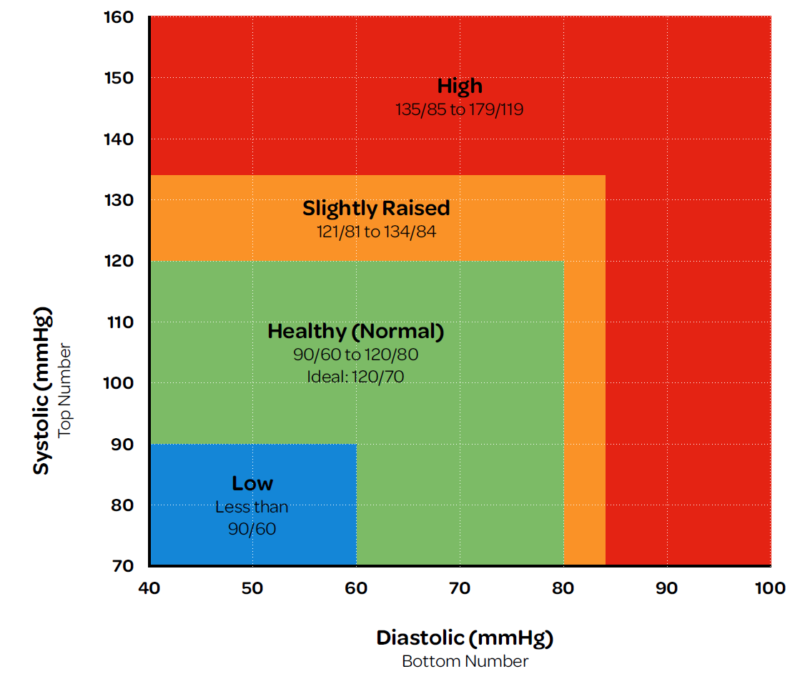
What does the colour mean?
BLUE = LOW = 90/60 and below
Your blood pressure reading is lower than usual. If you feel dizzy, faint or unwell, please seek advice from your GP or another healthcare professional.
GREEN = HEALTHY = 120/80 and below
Your blood pressure reading is in a healthy range. Keep up your healthy habits
ORANGE = SLIGHTLY RAISED = 121/81 to 134/84
Your blood pressure reading is a little higher than the healthy range. Keep checking it.
Aim for 120/80 or less to keep health risk low.
RED = HIGH = 135/85 and above
Your blood pressure reading is high. If your readings are high on a regular basis speak to your GP or healthcare professional and take your diary/written record with you.
If your blood pressure is very high
If your reading is very high (180/120 and above) stay calm and repeat the reading after 5 minutes.
If it is still very high, contact a health professional for advice that day, even if you feel well.
If you have a very high reading and feel seriously unwell, seek urgent medical attention.

Looking after your Blood Pressure
Don't wait until your blood pressure is high before looking after it.
Healthy lifestyle choices can help protect your heart health.
Lifestyle changes can help prevent and significantly reduce high blood pressure.
Top Tips for a Healthy Blood Pressure
Maintaining a healthy blood pressure will help reduce your risk of heart and circulatory disease.
There are several changes you can make to your lifestyle to reduce high blood pressure and to maintain a healthy blood pressure:
- Reduce Salt Intake - Adults should eat no more than 6g of salt a day (approx. a teaspoonful). Read the labels on food packaging, choose foods lower in salt and try replacing salt with pepper, herbs and spices to add flavour.
- Be More Active - Move more and sit less! Adults should aim for at least 150 minutes of moderate intensity or 75 minutes of vigorous intensity physical activity each week. 2 days of strengthening exercises should also be included.
- Maintain a Healthy Weight - Being overweight means your heart must work harder to do everyday tasks- this leads to high blood pressure. Maintaining a healthy weight involves a combination of eating a healthy diet and being more physically active.
- Limit Alcohol Intake - Drinking too much alcohol increases the risk of high blood pressure and can cause weight gain. We should drink no more than 14 units of alcohol per week, with several alcohol-free days. Men should have no more than 8 units and women no more than 6 units of alcohol per session.
- Increase Fruit and Vegetable Consumption - Fruit and vegetables contain vitamins and minerals, along with fibre which help to reduce the risk of high blood pressure and improve our heart health. We should aim for 5 portions a day which can be fresh, frozen, canned, dried or juiced.
6 out of 10 strokes could be prevented by managing high blood pressure and leading a healthy lifestyle.
If you have been diagnosed with high blood pressure, you should also take medication for high blood pressure as prescribed by your doctor or health professional in addition to making changes to your lifestyle, unless your health professional is happy for you to stop your medication. If you are on blood pressure medication, you should go for an annual blood pressure check to review your medication.
Click here to find out more about lifestyle changes you can make to keep healthy.
NICHS can also provide support with:
- Demonstrations and support to use your blood pressure monitor correctly.
- Health and lifestyle advice
- 1 to 1 Behaviour change programmes
Contact us for more information on wellcommunity@nichs.org.uk