February is Heart Month and with coronary heart disease being the biggest single cause of premature death in people younger than 75 in Northern Ireland and 185,554 people here living with circulatory conditions, we are using the month to put a spotlight on heart health.
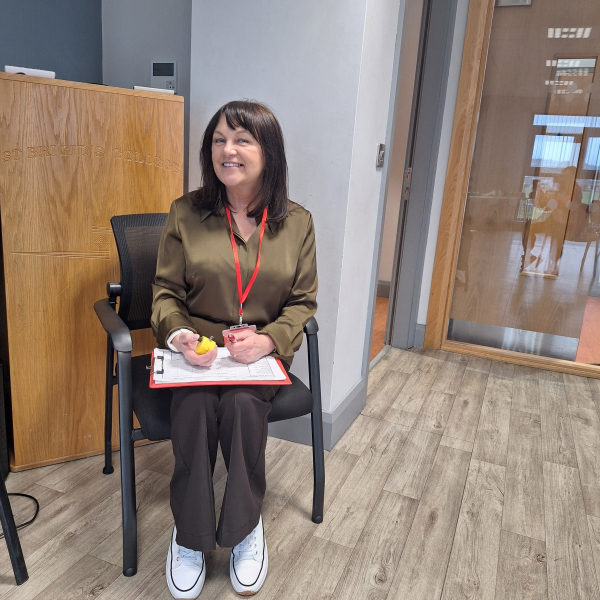
In support of Heart Month and our work Sandra McCartney, 65 from Derry/Londonderry, is sharing her story of having both a heart attack and cardiac arrest to help raise public awareness.
Sandra recalls; “I was in Spain on holidays just after Christmas 2019. It was supposed to be a lovely break, and I could never have imagined I would have a heart attack, followed by a cardiac arrest, and end up seriously ill in hospital.”
“The night before New Year’s Eve I went to bed early but couldn’t sleep. I had been having what at the time I thought were indigestion pains all day and which I believed were down to my hiatus hernia. By 3.30am I knew something was seriously wrong-my right arm was tingling a lot, and I was bent over in pain. I told my husband I needed to go to the local health clinic and when I was getting my shoes on, I nearly passed out on the bed. My husband shook me and brought me round, but it happened again in the car on the way to the clinic which thankfully was only a 3-minute drive away.”
“When we arrived the doctor took my blood pressure which was sky high and I was told I was having a massive heart attack. An ambulance was called and I remember seeing my husband in the ambulance, but I remember nothing more, until four days later. I had a cardiac arrest in the ambulance, and the paramedics had to give me six defibrillator shocks and five shots of adrenaline to save my life. I had three cracked ribs from the CPR I had to be given and I was gone for ten minutes before they got me back which is terrifying to think about.”
Sandra continues; “I was ventilated for eleven days in hospital, and my children had to fly out to Spain as they feared the worst might happen.”
“I remember nothing until day four when I was brought round but a few hours later, I was ventilated again because both my lungs collapsed. I was woken four days later but I then developed laryngeal stridor, which makes your breathing noisy and harder to do, and which is potentially life-threating, due to being ventilated too quickly, too many times. I had to then by ventilated again. ”
“I was taken to a ward on day eleven and stayed there for another week. I wasn’t allowed to fly home until into February and I had to use a wheelchair as I experienced so much muscle wastage over the weeks in hospital. It was just horrendous. It was an ordeal for me, but also for my husband and my children. Never in a million years did I think something like this could happen to me. I was fit, healthy, ate really well, I had no signs or symptoms or worries about my health. That’s why I am sharing my story during Heart Month, to make people more aware of heart health and cardiac conditions and to spread the message that if you start experiencing any symptom related to a heart attack or you think someone might have gone into cardiac arrest, to phone 999 immediately.”
Sadly, Sandra’s ordeal didn’t end when she left Spain. “I wasn’t home long when I passed out one day and had to be admitted to Altnagelvin Hospital for a week. The pandemic started not long after I was discharged so unfortunately, I didn’t get any cardiac rehab which would have been so beneficial to my recovery. I had phone call consultations with different health professionals, but my recovery journey looked a lot different to what it would now and that is a shame. I suffered an awful lot with PTSD and still do.”
“I had to have an ICD (implantable cardioverter defibrillator) fitted which is a small electrical device to treat my abnormal heart rhythm. I also had surgery to have two stents fitted. I found out I have heart failure and my ejection fraction, which is the amount of blood squeezed out of the main chamber of the heart with every heartbeat, is only working between 20% and 30%. There is damage to my heart’s left ventricle, and it is lying dormant. It means there are lots of things that are much more difficult for me now like walking upstairs or uphill. Anything that involves exertion, even something as simple as throwing a duvet on the bed, leaves me breathless. There are days I can do very little.”
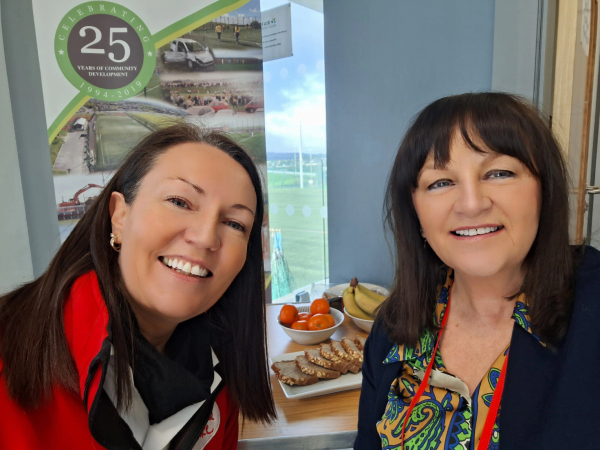
Somewhere Sandra did receive the support she was so in need of however was through Northern Ireland Chest Heart & Stroke (NICHS). “I was put in touch with one of the charity’s Care Services Coordinators, Karen, through my sister, Carolann. Karen was doing chair yoga classes via Zoom at the time which I took part in. She then contacted me when NICHS started a local Heart Strong Education Programme group to see if I would be interested in attending. Heart Strong is an education and peer support programme for people with a cardiac diagnosis which is designed to help you learn more about your health and take the positive steps needed to move forward post diagnosis. After four years of no real support, I was so grateful to go and meet with people who have experienced something similar to me. Going to Heart Strong made me feel like I wasn’t alone and I got the support I really needed. I also got tips and advice from the other participants on how they manage their conditions and that has been really helpful.”
“I wanted to give something back for the help I received from NICHS, so I now volunteer at their local Post Rehab Exercise Programme group which is for stroke survivors as well as their Breathing Better Wellness Session which is for people living with respiratory conditions. Although I’m working with people whose condition isn’t cardiac, I can still relate and help as I know what it's like to live with a life-changing and long-term condition. People might think there isn’t much hope after they are diagnosed with a condition, that there are lots of things they can’t do now, but I am able to show them differently. It’s great to be able to help people and give them hope, to show them their life might be different now, but it can still be good and have positives.”
“I've worked all my life but unfortunately haven’t been able to return to work which has been hard for me. I can't stand sitting in the house all day and I’m a sociable person, so volunteering gives me another opportunity to get out and about and do something. It helps give me focus and routine which is great for the mind too. I’m helping others but it helps me as well.”
Ursula Ferguson, Director of Care Services at Northern Ireland Chest Heart & Stroke, comments, “We are very grateful to Sandra for sharing her story and raising awareness of heart attack, cardiac arrest and heart health. This Heart Month we would urge people to remember the STOP acronym because unfortunately, a lot of people don’t realise they are actually having a heart attack. If you notice yourself or someone else presenting with any of these symptoms, don’t wait, call an ambulance immediately.”
“The STOP acronym stands for:
S – Something’s not right – symptoms can start slowly
T – Tightness or pain in the chest, pain in the arm, neck, or jaw
O – Other symptoms such as shortness of breath, nausea, or sweating
P – Phone 999 immediately.”
“We also want to highlight the signs and symptoms suggesting a person has gone into cardiac arrest, which include; they appear not to be breathing, they are not moving, they do not respond to any stimulation, such as being touched or spoken to.
If you think somebody has gone into cardiac arrest phone 999, start CPR, use a defibrillator, if available, When you phone 999 the operator will be able to tell you what to do. If you are unable to restart the person’s heart, CPR will at least keep the blood, containing oxygen, flowing around the patient’s body until an ambulance arrives.”
“Phoning 999 immediately is very important; there is no time to waste when the signs of a cardiac arrest strike or a heart attack. Every minute that passes can mean the difference between life and death from an out of hospital cardiac arrest. The sooner a potential heart attack is recognised, and the faster medical help is sought, the better the chances of recovery are.”
For more information about heart conditions, visit www.nichs.org.uk/heartconditions If you have been affected by a heart condition and need support, visit www.nichs.org.uk/heart-support for further information about Northern Ireland Chest Heart & Stroke’s support services.